
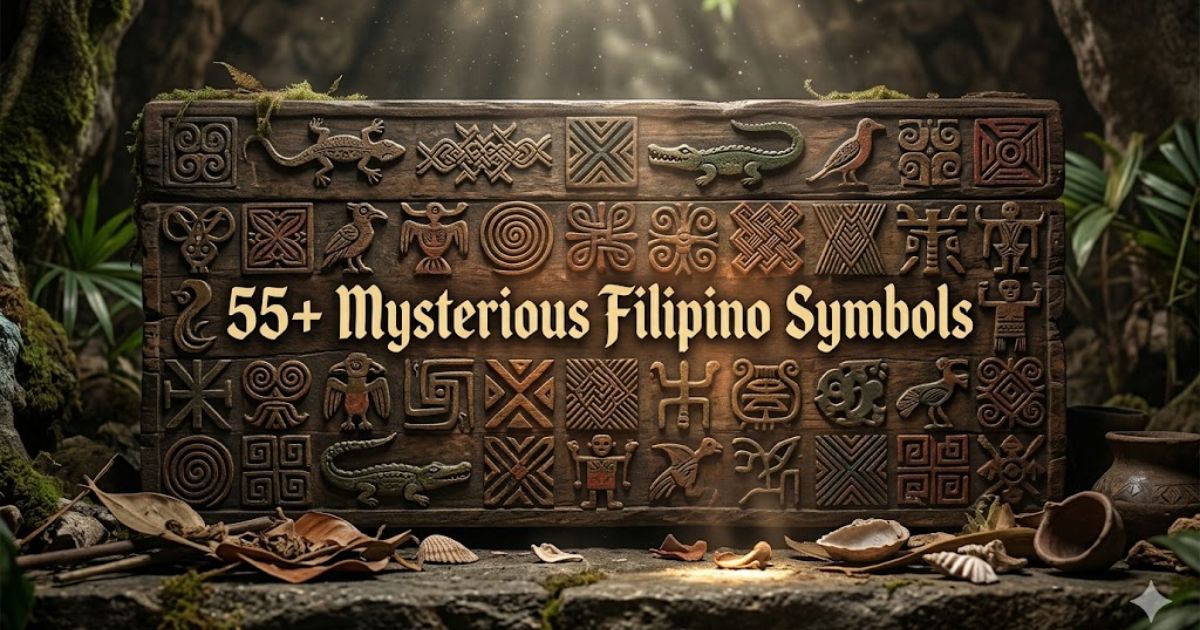

The Philippines is a nation rich in history, culture, spirituality, and tradition. Across its more than 7,000 islands, generations have preserved powerful symbols that represent identity, courage, family, faith, protection, and freedom. Some of these symbols appear in indigenous art, while others are embedded in national emblems, tattoos, folklore, and ancient writing systems.
Many Filipino symbols carry meanings that go far beyond their appearance. They tell stories of warriors, ancestors, dreams, beliefs, and cultural values that have shaped Filipino society for centuries.
In this guide, we explore over 55 fascinating Filipino symbols and uncover the hidden meanings behind them. Whether you are researching Filipino heritage, studying cultural symbolism, or simply curious about the Philippines, this comprehensive guide will help you understand these meaningful icons.
What Are Filipino Symbols?
Filipino symbols are visual representations, objects, signs, patterns, animals, plants, and cultural icons that reflect the beliefs, traditions, history, and identity of the Filipino people.
These symbols can be found in:
- National emblems
- Indigenous artwork
- Traditional clothing
- Tattoos
- Architecture
- Religious practices
- Folklore
- Ancient scripts
Many Filipino symbols serve as reminders of values such as:
- Unity
- Family
- Respect
- Bravery
- Faith
- Freedom
- Community
Some symbols date back thousands of years and continue to influence modern Filipino culture today.
Filipino Cultural Symbols And Their Meanings
Filipino symbols and meanings
The Philippines contains a wide variety of symbols representing different aspects of life.
| Symbol | Meaning |
| Sarimanok | Prosperity and good fortune |
| Philippine Sun | Freedom and independence |
| Sampaguita | Purity and humility |
| Carabao | Hard work and resilience |
| Baybayin | Cultural heritage |
| Narra Tree | Strength and endurance |
| Anito | Ancestor guidance |
| Eagle | Courage and national pride |
| Baking Patterns | Community and creativity |
| Okir Designs | Spiritual connection |
These symbols continue to appear in Filipino celebrations, artwork, education, and daily life.
Filipino flag
The Philippine flag is among the most meaningful national symbols in Southeast Asia.
Symbolism of the Flag
| Element | Meaning |
| White Triangle | Equality and fraternity |
| Blue Stripe | Peace and justice |
| Red Stripe | Patriotism and courage |
| Golden Sun | Freedom and independence |
| Eight Rays | First provinces that revolted against Spain |
| Three Stars | Luzon, Visayas, and Mindanao |
The flag represents the country’s struggle for independence and national unity.
Filipino symbols tattoos
Traditional Filipino tattoos are among the oldest cultural symbols in the Philippines.
Ancient warriors often wore tattoos to symbolize:
- Courage
- Battle achievements
- Protection
- Spiritual power
- Social status
The Kalinga people are particularly known for preserving traditional tattoo practices.
Popular tattoo symbols include:
- Sun patterns
- Tribal spirals
- Crocodile designs
- Eagle motifs
- Mountain symbols
Today, these tattoos are celebrated as symbols of Filipino identity.
Filipino symbols tattoos
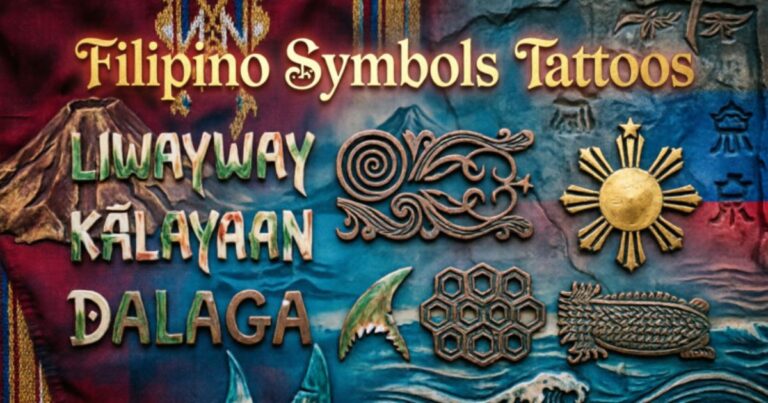
Modern Filipino tattoo art often combines traditional tribal patterns with contemporary styles.
Common meanings include:
- Family loyalty
- Heritage
- Strength
- Cultural pride
- Protection from harm
Many Filipinos choose ancestral designs to reconnect with their roots.
Filipino symbols letters
The most famous Filipino symbolic lettering system is Baybayin.
Baybayin was used before Spanish colonization and remains an important symbol of Filipino heritage.
Characteristics include:
- Elegant curves
- Syllabic writing system
- Historical significance
- Cultural revival movement
Today Baybayin appears in:
- Tattoos
- Logos
- Artwork
- Jewelry
- Educational projects
Philippines symbols and meanings
The Philippines is represented by many symbols that reflect its culture and history.
Popular National and Cultural Symbols
- Philippine Eagle
- Sampaguita
- Narra Tree
- Carabao
- Sun and Stars
- Sarimanok
- Baybayin
- Anito Figures
- Banaue Rice Terraces
- Barong Tagalog
Each represents a unique aspect of Filipino life and values.
National Symbols Of The Philippines
National symbols help strengthen patriotism and preserve cultural identity.
What are the 10 national symbols of the Philippines
The most recognized national symbols include:
| National Symbol | Representation |
| Philippine Flag | Nationhood |
| Philippine Eagle | National bird |
| Sampaguita | National flower |
| Narra | National tree |
| Philippine Pearl | National gem |
| Arnis | National sport |
| Carabao | National animal |
| Mango | National fruit |
| Bangus | National fish |
| Barong Tagalog | National attire |
These symbols are commonly taught in schools and featured in government institutions.
Philippine national symbols PDF
Many educational institutions provide downloadable resources that explain Philippine national symbols.
These documents often include:
- Historical background
- Images
- Official descriptions
- Cultural significance
- Educational activities
They are widely used in classrooms across the country.
Philippines national bird
The Philippine Eagle is one of the world’s largest and rarest eagles.
Symbolic Meaning
- Strength
- Courage
- Freedom
- National pride
- Environmental responsibility
Its majestic appearance has made it a symbol of resilience and independence.
Philippine national symbols with pictures and description
The most recognized national symbols can be summarized below.
| Symbol | Description |
| Eagle | Power and bravery |
| Sampaguita | Purity and devotion |
| Narra | Strength and stability |
| Flag | Independence |
| Carabao | Hard work |
| Mango | Abundance |
| Bangus | Food heritage |
These symbols help preserve Filipino values and traditions.
National tree of the philippines
The Narra Tree is the national tree of the Philippines.
What Narra Represents
- Strength
- Stability
- Leadership
- Endurance
- Integrity
Its durable wood has made it a symbol of lasting character and resilience.
Ancient And Traditional Filipino Symbols
Ancient Filipino communities developed unique symbols long before colonial influence.
These symbols often reflected nature, spirituality, and social organization.
Ancient filipino symbols
Some of the oldest Filipino symbols include:
- Baybayin characters
- Anito statues
- Sarimanok
- Okir motifs
- Tribal tattoos
- Sun symbols
- Warrior shields
Many continue to inspire modern Filipino art and design.
Filipino symbolism
Filipino symbolism often focuses on interconnected themes.
Common Symbolic Themes
- Family
- Nature
- Spirituality
- Community
- Ancestors
- Courage
- Harmony
These concepts are deeply embedded in Filipino culture.
Traditional filipino symbols
Traditional symbols vary among regions and ethnic groups.
Examples include:
| Symbol | Ethnic Origin |
| Sarimanok | Maranao |
| Okir | Mindanao |
| Lingling O | Cordillera |
| Baking Patterns | Visayan |
| Baybayin | Tagalog |
These symbols preserve regional identities while contributing to national culture.
Filipino good luck symbols
Several Filipino symbols are associated with prosperity and fortune.
Popular examples include:
- Sarimanok
- Golden Sun
- Rice Grains
- Coconut Tree
- Fish Symbols
- Bamboo
Many households display these symbols during celebrations and special occasions.
Filipino ancient symbols
Ancient Filipino societies used symbols to communicate social status, beliefs, and traditions.
Common ancient motifs include:
- Geometric patterns
- Animal figures
- Sun imagery
- Ancestral carvings
- Protective marks
These symbols continue to inspire cultural preservation efforts.
Filipino indigenous symbols
Indigenous groups across the Philippines maintain rich symbolic traditions.
Important indigenous symbols include:
- Lingling O amulet
- Crocodile motifs
- Rice spirit imagery
- Tribal weaving patterns
- Warrior tattoo designs
These symbols often connect people to their ancestors and environment.
Filipino protection symbols
Many traditional symbols were believed to provide protection.
Examples include:
| Symbol | Protective Meaning |
| Anito Figures | Guardian spirits |
| Lingling O | Spiritual protection |
| Crocodile Symbol | Strength |
| Warrior Tattoos | Safety in battle |
| Sacred Patterns | Protection from evil |
Such symbols played important roles in precolonial beliefs.
Filipino Symbols Of Identity, Culture And Strength
Filipino symbols help define cultural identity while preserving traditions passed down through generations.
Family filipino symbols and meanings
Family is central to Filipino culture.
Symbols associated with family include:
- Bamboo
- House imagery
- Circular patterns
- Rice bundles
- Traditional weaving
These symbols represent unity, support, and continuity.
Filipino symbols for strength
Many symbols emphasize resilience and courage.
Examples include:
- Philippine Eagle
- Narra Tree
- Carabao
- Warrior Tattoos
- Sun Emblem
They remind Filipinos of perseverance during challenges.
Symbols that represent filipino culture
Several icons instantly represent Filipino culture worldwide.
Examples include:
- Jeepney
- Barong Tagalog
- Bahay Kubo
- Sarimanok
- Sampaguita
These symbols reflect creativity, hospitality, and cultural pride.
Filipino symbols of strength
Strength in Filipino symbolism is often linked to survival and determination.
The most powerful examples include:
- Narra Tree
- Eagle
- Bamboo
- Carabao
- Ancient warrior imagery
These symbols highlight the enduring spirit of the Filipino people.
Filipino culture symbols
Filipino culture symbols are visible in festivals, ceremonies, schools, and public spaces.
Common examples:
- Flag
- Sun and Stars
- Sampaguita
- Baybayin
- Traditional musical instruments
Each contributes to preserving cultural identity.
Filipino symbols culture
Culture and symbolism are deeply connected in the Philippines.
Symbols communicate:
- Heritage
- Beliefs
- History
- Community values
- National pride
This makes them powerful educational and cultural tools.
Indigenous filipino symbols
Indigenous communities preserve some of the country’s oldest symbolic traditions.
Notable examples include:
- Ifugao carvings
- Kalinga tattoos
- T’boli patterns
- Maranao Okir
- Lingling O pendants
These symbols represent centuries of living tradition.
Symbols of filipino identity
Symbols of Filipino identity include:
- Philippine Flag
- Baybayin
- Sarimanok
- Sampaguita
- Narra Tree
- Philippine Eagle
Together they tell the story of the Filipino people and their heritage.
Symbols of Filipino culture
Filipino culture is represented through both ancient and modern symbols.
Important examples include:
- Traditional dances
- Folk art
- Tribal patterns
- National emblems
- Indigenous designs
These symbols continue to unite Filipinos around the world.
More Ancient And Cultural Filipino Symbols
The Philippines is home to dozens of traditional symbols that have survived through oral traditions, indigenous art, folklore, and cultural practices. Many of these symbols continue to inspire modern Filipinos who seek a deeper connection with their roots.
Ancient filipino symbols and meanings
Ancient Filipino symbols often reflected spirituality, nature, ancestry, and community values.
| Ancient Symbol | Meaning |
| Lingling O | Fertility and protection |
| Sarimanok | Prosperity and good fortune |
| Anito Figures | Ancestor guidance |
| Crocodile Motif | Power and survival |
| Sun Symbol | Life and energy |
| Rice Symbol | Abundance and prosperity |
| Mountain Symbol | Stability and strength |
| Wave Pattern | Adaptability and life journey |
These symbols were commonly used in carvings, jewelry, pottery, and tribal rituals.
Filipino cultural symbols
Filipino cultural symbols help preserve traditions across generations.
Popular cultural symbols include:
- Bahay Kubo
- Barong Tagalog
- Sampaguita
- Jeepney
- Baybayin
- Sarimanok
- Baking Weaving
- Traditional Gongs
Each symbol reflects a unique aspect of Filipino life and history.
Ancient filipino symbols for strength
Strength has always been an admired trait in Filipino culture.
Ancient symbols associated with strength include:
- Philippine Eagle
- Warrior Tattoos
- Narra Tree
- Crocodile Designs
- Mountain Motifs
- Sun Emblems
These symbols represented courage, resilience, and determination.
Filipino symbols for family
Family remains one of the most important values in the Philippines.
Symbols linked to family include:
- Bamboo
- Rice Bundles
- Circular Patterns
- Traditional Homes
- Family Trees
These symbols represent unity, loyalty, support, and continuity.
Traditional filipino symbols and meanings
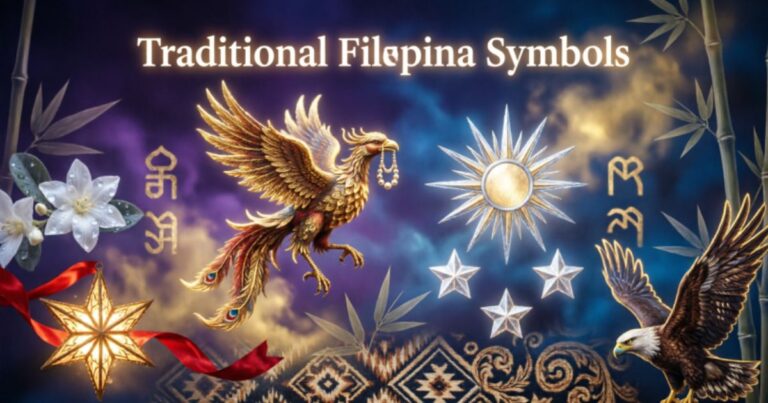
Many traditional Filipino symbols carry messages that remain relevant today.
| Symbol | Traditional Meaning |
| Bamboo | Flexibility and resilience |
| Rice | Prosperity |
| Eagle | Leadership |
| Sampaguita | Purity |
| Narra | Strength |
| Sarimanok | Blessings |
| Baybayin | Heritage |
These symbols continue to appear in modern Filipino art and celebrations.
Old filipino symbols for strength
Historical symbols of strength often came from warrior cultures.
Examples include:
- Tattoo markings
- Spears
- Warrior shields
- Crocodile imagery
- Eagle symbols
These icons represented bravery in both physical and spiritual battles.
Tagalog family filipino symbols and meanings
In Tagalog culture, family-centered symbols often emphasize togetherness.
Common examples include:
- Bamboo clusters
- Home structures
- Circular motifs
- Rice fields
These symbols remind people of cooperation, respect, and family bonds.
Common filipino symbols
Some of the most common Filipino symbols seen today include:
- Philippine Flag
- Sun and Stars
- Sampaguita
- Narra Tree
- Philippine Eagle
- Baybayin
- Sarimanok
- Jeepney
- Bahay Kubo
- Carabao
These symbols are widely recognized throughout the country.
Filipino symbols and practices
Many symbols are connected to traditional Filipino practices.
Examples include:
- Rice offerings
- Ancestor remembrance
- Tribal tattooing
- Weaving traditions
- Religious festivals
Symbols help preserve cultural knowledge and community identity.
Warrior filipino symbols
Warrior symbols played important roles in precolonial Filipino societies.
Popular warrior symbols include:
- Eagle
- Crocodile
- Spears
- Tattoo markings
- Sun patterns
They represented honor, courage, and victory.
Philippine filipino symbols
Philippine symbols combine indigenous traditions with national identity.
Examples include:
- National Flag
- Philippine Eagle
- Narra Tree
- Sampaguita
- Baybayin
Together they reflect the country’s rich cultural heritage.
ILocano ancient filipino symbols and meanings
Ilocano culture contains unique symbols linked to farming, family, and resilience.
Common symbolic elements include:
- Rice imagery
- Water symbols
- Traditional weaving patterns
- Agricultural tools
These represent hard work, prosperity, and community values.
Deep Symbolic Meaning of Filipino Symbols
Filipino symbols often carry multiple layers of meaning that extend beyond their visual appearance.
Spiritual Level
On a spiritual level, many Filipino symbols connect individuals with ancestors, divine forces, and nature.
Examples include:
- Anito figures
- Sacred mountains
- Traditional amulets
- Sun symbols
These symbols often represent protection, guidance, and spiritual balance.
Psychological Level
Psychologically, symbols help people express identity and values.
They can inspire:
- Confidence
- Courage
- Hope
- Belonging
- Personal growth
Many Filipinos feel emotionally connected to cultural symbols because they reinforce a sense of heritage.
Cultural Level
At the cultural level, symbols preserve traditions and collective memory.
They help communities:
- Maintain identity
- Celebrate history
- Pass down knowledge
- Strengthen social bonds
Without symbols, many cultural stories would be forgotten over time.
Types and Variations of Filipino Symbols
Different Filipino symbols serve different purposes depending on their cultural origins and meanings.
Sarimanok
The Sarimanok is one of the most famous symbols in Philippine culture.
Originating from the Maranao people of Mindanao, it is often depicted as a colorful bird carrying a fish in its beak.
Meaning of Sarimanok
- Prosperity
- Good fortune
- Leadership
- Honor
- Success
Today, it remains one of the strongest symbols of Filipino creativity and cultural heritage.
Sun and Stars of the Philippine Flag
The sun and stars are among the most recognizable national symbols.
Symbolic Meaning
Sun
- Freedom
- Independence
- Enlightenment
Eight Rays
- Revolutionary provinces
Three Stars
- Luzon
- Visayas
- Mindanao
These elements symbolize national unity and patriotism.
Anito Figures
Anito figures represent ancestral spirits in traditional Filipino belief systems.
Ancient communities created these carvings to honor and communicate with ancestors.
Symbolic Meaning
- Protection
- Guidance
- Spiritual connection
- Family continuity
They remain important cultural artifacts today.
Okir Patterns
Okir is a traditional decorative art form primarily associated with the Maranao people.
The designs often feature flowing lines and plant-inspired motifs.
Meaning
- Harmony
- Beauty
- Spiritual connection
- Cultural identity
Okir patterns can be found on houses, boats, weapons, and musical instruments.
Baybayin Script
Baybayin is the ancient writing system of the Tagalog people.
Although it was largely replaced during Spanish colonization, it has experienced a strong revival in recent years.
Symbolic Meaning
- Cultural pride
- Heritage preservation
- Filipino identity
- Historical awareness
Baybayin is now widely used in tattoos, logos, and educational projects.
Filipino Symbols Across Cultures
Filipino symbols have been influenced by various cultures throughout history.
These influences include:
- Indigenous traditions
- Malay heritage
- Chinese trade relations
- Spanish colonization
- American influence
Despite these influences, many Filipino symbols have maintained their unique cultural identity.
For example:
| Symbol | Cultural Influence |
| Baybayin | Indigenous |
| Sarimanok | Islamic and Maranao |
| Sampaguita | Southeast Asian |
| Barong Tagalog | Indigenous and Colonial |
| Jeepney | American-era adaptation |
This blend of influences makes Filipino symbolism especially diverse.
Filipino Symbols in Art, Movies and Pop Culture
Modern Filipino artists continue to use traditional symbols in creative ways.
Common appearances include:
- Films
- Paintings
- Street murals
- Fashion designs
- Jewelry
- Digital art
Baybayin and Sarimanok are especially popular among younger generations seeking cultural connection.
Many Filipino movies also use symbolic imagery to represent family, sacrifice, courage, and national pride.
These symbols help bridge the gap between ancient traditions and modern culture.
Spiritual and Dream Meaning of Filipino Symbols
Dreams involving Filipino symbols often carry personal and cultural significance.
Common Interpretations
| Symbol | Dream Meaning |
| Eagle | Personal power |
| Sun | New opportunities |
| Rice | Abundance |
| Sarimanok | Good fortune |
| Anito | Guidance from ancestors |
| Bamboo | Adaptability |
| Flag | Pride and identity |
Dream interpretations vary based on personal beliefs and experiences.
Positive vs Negative Meaning
Most Filipino symbols carry positive meanings, though some may have contrasting interpretations depending on context.
| Symbol | Positive Meaning | Possible Negative Meaning |
| Eagle | Leadership | Aggression |
| Sun | Success | Excessive pride |
| Crocodile | Strength | Danger |
| Warrior Tattoo | Courage | Conflict |
| Anito | Guidance | Fear of the unknown |
Understanding cultural context is important when interpreting symbolism.
Why Humans Are Attracted to Filipino Symbols
People are naturally drawn to symbols because symbols communicate complex ideas quickly and emotionally.
Filipino symbols are especially appealing because they represent:
- Heritage
- Family
- Faith
- Courage
- Identity
- Community
These universal themes create strong emotional connections across generations.
Symbols also help people feel connected to something larger than themselves, whether that is culture, ancestry, or national identity.
FAQs
What are the most important Filipino symbols?
The Philippine Flag, Philippine Eagle, Sampaguita, Narra Tree, Baybayin, and Sarimanok are among the most important Filipino symbols.
Are Filipino symbols religious?
Some Filipino symbols have spiritual or religious origins, while others represent culture, history, or national identity.
Why is Baybayin popular today?
Baybayin is popular because it represents Filipino heritage and cultural pride.
Do Filipino symbols have meanings in dreams?
Yes. Many people interpret Filipino symbols in dreams as messages related to identity, growth, protection, or opportunity.
Can non Filipinos use Filipino symbols?
Yes, provided they use them respectfully and understand their cultural significance.
Are Filipino symbols still used today?
Absolutely. Filipino symbols remain visible in art, education, government, fashion, and everyday life.
https://englishfleat.com/41-legendary-leadership-symbols-from-history/
Conclusion
Filipino symbols are much more than decorative images or historical artifacts. They represent centuries of cultural wisdom, spiritual beliefs, national pride, and community values. From the majestic Philippine Eagle and the enduring Narra Tree to the ancient Baybayin script and the legendary Sarimanok, each symbol tells a story about the Filipino people’s journey through history.
Understanding these symbols helps preserve cultural heritage while strengthening appreciation for the traditions that continue to shape modern Filipino identity. Whether found in indigenous art, national emblems, tattoos, architecture, or everyday life, Filipino symbols remain powerful reminders of resilience, unity, faith, family, and strength.
Their meanings continue to inspire not only Filipinos but also people around the world who admire the rich cultural legacy of the Philippines.